By S. P. Polianchykov, A. I. Kovbel, V. Y. Poberezhnyk and colleagues, KVADRAT Research and Production Company.
Crop nutrition is especially important in the early stages of plant development. Starter fertilizer applied at sowing can improve nutrient uptake, even in soils that have more than a low supply of plant-available nutrients.
Granular and liquid starter fertilizers are commonly placed by the “5 × 5” method: approximately 5 cm below and 5 cm to the side of the seed. This distance helps reduce the risk that a high fertilizer concentration will injure emerging roots. Too much fertilizer in direct contact with seed can damage seedlings.
Modern high-purity liquid fertilizers with few unwanted impurities offer another approach. When their salt index is low and the application rate is appropriate, some can be placed directly in the seed zone. This placement method is known as POP-UP starter fertilization.
Well-nourished seedlings may establish more strongly, compete more effectively with weeds, and better withstand pests and diseases. Seed-zone nutrition can be particularly useful in cool soils, where low nutrient availability limits uptake. The original article reports that phosphorus-use efficiency with POP-UP placement can be up to 40 times higher than with a broadcast basal application.
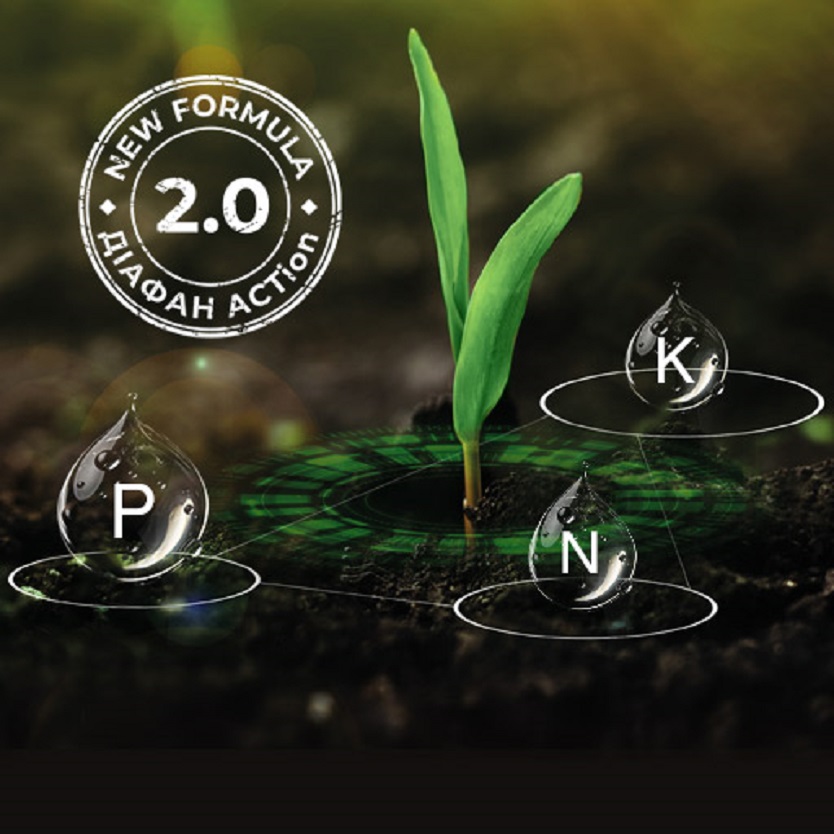
Phosphorus is central to starter nutrition because it moves very little in soil and is essential for root growth. According to the article, uptake becomes particularly difficult when soil temperature falls below +14 °C. A modest amount of nitrogen in a starter fertilizer supplies early nitrogen without damaging seedlings and can support phosphorus uptake. Potassium can also help nutrient uptake and transport. Micronutrients may be added to a suitable tank mix or applied later as a foliar treatment.
Phosphorus availability is a recurring challenge in balanced crop nutrition. Iron, aluminium, and calcium phosphates and other compounds have low solubility. A soil may therefore contain substantial phosphorus while still supplying too little to plants under particular growing conditions. Poor availability can limit yields. Because phosphorus has low mobility, root hairs can take up available phosphorus only from a very short distance, around 1–2 mm.
Liquid fertilizers based entirely on orthophosphates can become available to plants soon after application, including in cool soil. Polyphosphates must first undergo hydrolysis before plants can use them; in cold soil, this process may take weeks.
Research on plant phosphorus uptake, including Föhse, Claassen and Jungk (1991), highlights the role of root hairs in taking up phosphorus from soil. This is one reason breeders consider root traits when developing phosphorus-efficient varieties. The amount a plant can absorb is constrained by phosphorus concentration at the root–soil interface. Roots must grow into fresh soil to reach more phosphorus, which is especially important where soil phosphorus is deficient.
Accurate POP-UP placement of a suitable high-purity, low-salt fertilizer concentrates nutrients near the germinating seed and can support early development. Product choice and application rate remain important: liquid fertilizers differ in salt index, impurity content, and phosphorus form, and not all are suitable for seed-zone application.